
Long Branch City Directory Holdings
The documented Long Branch city directory shelf is not one uninterrupted run. It begins with an 1883 guide by William R. Evans, continues with Boyd's 1912 Directory of Long Branch, including Deal and Elberon, and includes an Official City Directory of Long Branch for 1927. Polk's volumes then provide the largest identified sequence. Each title and year is evidence of a particular publication, not proof that every resident appeared or that an address was occupied for the whole year.
| Collection | Years | Where Held | Access |
|---|---|---|---|
| Evans guide and directory | 1883 | NJ State Library inventory; NJ Historical Society microfilm guide | Catalog and microfilm metadata |
| Boyd's Directory of Long Branch | 1912 | NJ State Library inventory; NJ Historical Society microfilm guide | Includes Deal and Elberon in its title |
| Official City Directory of Long Branch | 1927 | NJ State Library inventory; NJ Historical Society microfilm guide | Repository and reel should be noted |
| Polk's Long Branch City Directory | 1937, 1940, 1946, 1948, 1949-50, 1953, 1956-57, 1959, 1961, 1963, 1965, 1966, 1968, 1970 | NJ State Library inventory; local-history and microfilm routes | Check each volume's geographic coverage |
The parallel NJ Historical Society list groups several Polk years as 1937-38, 1948-50, 1965-66, and 1968-70 under its Asbury Park City Directories Series. That difference is a cataloging detail worth retaining. It can identify a reel or regional series even when a Long Branch volume is not separately digitized.
Access also varies by item. The research confirmed catalog and reel metadata, but did not capture a publicly viewable Long Branch page with a verified entry. A catalog hit, a microfilm reel, and an online image are different levels of access. Record which one was consulted. That distinction matters when someone else needs to repeat the search or when a faint reel image makes a name or street difficult to read.
Long Branch City Directory Years
A short timeline helps prevent a false sense of continuity. The known sequence moves from the Evans volume, to Boyd's regional title, to the 1927 official directory, and then to the later Polk's run. The gap between any two listed years is just that, a gap in the verified run. It should not be filled with an assumed move, death, or absence.
The New Jersey State Library genealogy route is a useful starting point for identifying repository paths and related archival material. Its catalog evidence supports the year and publisher record; it does not supply a verified Long Branch entry from every volume.

The State Library source is most useful before searching a personal name, because the year, publisher, and holding information tell a researcher which item to request or locate.
INSIDER TIP. Preserve the place name exactly as printed. A Long Branch city directory may also use Elberon, West End, North Long Branch, or another historic section label. Those terms are search clues, not modern boundary proof.
Long Branch Directory Help at the Library
Long Branch Public Library is the local bridge between a directory citation and the wider record trail. Its Local History Room identifies city directories, yearbooks, newspapers, maps, atlases, photographs, local organizations, and genealogy links. The library lists historian Janice Grace and assistant Carlee Migliorisi, and expressly offers help with house history. A request works best when it supplies a surname or street, the approximate period, spelling variants, and the purpose of the question.
Long Branch Public Library provides the public-library access point for its main and Elberon Branch services, including local-history resources.
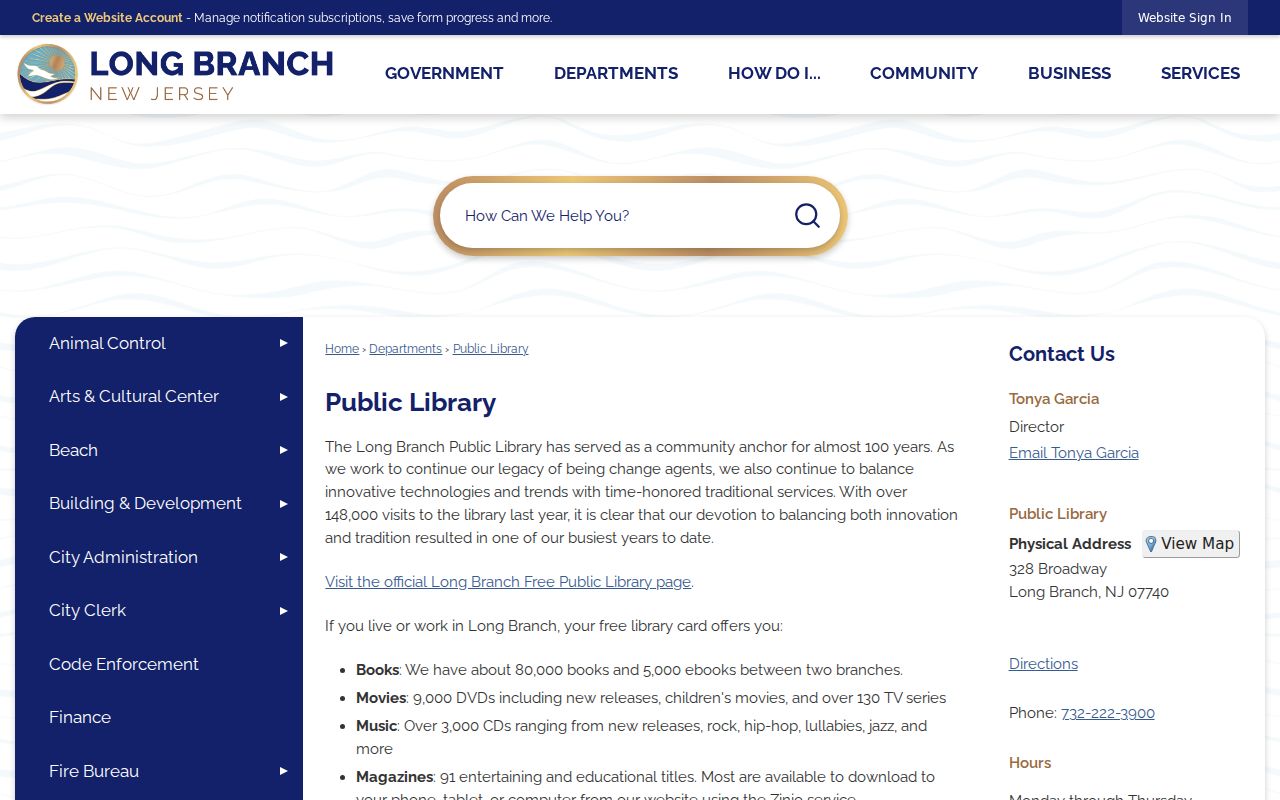
Library help is particularly valuable when an address may have changed form, a historical section name appears in a listing, or a directory result needs to be paired with a map, photo, or newspaper date.
Reading Long Branch City Directory Entries
The Library of Congress describes common city-directory arrangements as alphabetical and address or telephone listings, with entries that may include a spouse, occupation, employer, address, or telephone information. The exact layout and abbreviations must be read in the individual Long Branch volume. No verified local page image or individual entry was captured in the research, so the inventory below is a reading checklist, not a reconstructed Long Branch listing.
| Name | Record the spelling, initials, and any cross-reference exactly as printed. |
|---|---|
| Address | Copy the street and number, then compare it with period maps before matching it to a modern location. |
| Occupation or employer | Note it as a dated role, not as a claim about a present-day person. |
| Household notation | Capture spouse or family wording only when the volume actually prints it. |
| Source detail | Keep the title, year, page, repository, and whether the item was an image, film, or catalog entry. |
- Criss-cross directory
- An address-arranged section that can place names along a street when the volume includes one.
- Householder index
- An index organized around a household or address, rather than solely an alphabetical personal name.
- Abbreviation key
- The volume's own explanation of shortened labels. Read and save it before interpreting symbols or initials.
Long Branch Directory Gaps on Microfilm
Catalog and reel metadata are part of the evidence. The NJ Historical Society guide confirms the Long Branch sequence and also lists wider Monmouth County runs for 1875, 1898-99, and 1904-05. Nearby coverage can help when a person or business appears under a broader county label, but it is not interchangeable with a Long Branch volume. Record the repository and reel alongside every result.
The NJ Historical Society microfilm directory guide documents the parallel directory runs and the broader regional context.
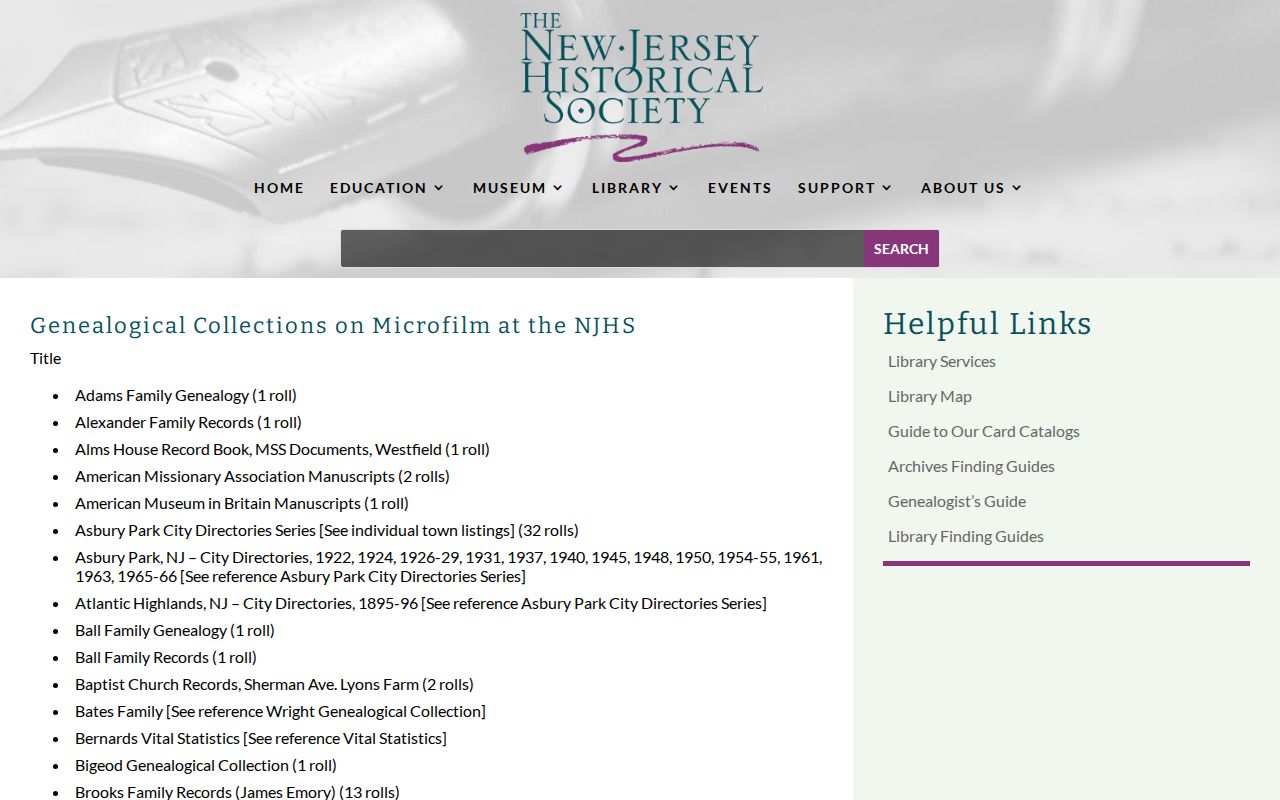
Microfilm availability resolves a catalog question, while the actual page, page number, and image quality still determine what a directory entry can support.
Long Branch City Directories and Sections
Regional coverage changed with the publisher and year. Later Polk's runs may include West Long Branch, Oceanport, Monmouth Beach, Sea Bright, Elberon, or North Long Branch. Boyd's 1912 title specifically includes Deal and Elberon. A directory search should therefore use the city, section, and exact title together. It should never treat a regional listing as automatic evidence of a Long Branch municipal address.
Long Branch's resort and rail history adds another caution. Historic sources describe hotels, boarding, business, and seasonal settings along with year-round civic life. A name beside a hotel or business address may record a role or temporary connection rather than a permanent household.
Search historic section names alongside the surname. Elberon, West End, Hollywood, Norwood Park, Branchport, East Long Branch, North Long Branch, and Pleasure Bay occur in local historical context. The original wording and date should stay in the research note, because a familiar section name does not by itself establish a present municipal boundary or an unchanged address.
Tracing Families in Long Branch Directories
For family history, follow a name through verified years instead of jumping from an old listing to a current assumption. Directory changes become more useful when they are tested against a separate record type. The library's holdings and county archives provide the supporting layers needed to distinguish a move, a name variant, a death, or a publication gap.
- Start with the directory year nearest to the event or address already known, and copy the entry with its page and source details.
- Check the next available Long Branch volume in both directions. Do not treat the unlisted calendar years as negative evidence.
- Compare the address and section name with a period map or atlas. Keep historic and modern address forms separate in the notes.
- Pair the directory period with the appropriate census, then use a newspaper, probate record, deed, or vital record as an independent confirmation.
- Label the result as a directory appearance, not a permanent-residence finding, and retain the date of every supporting source.
A disappearance can mean many things: a move, a changed name, a death, a regional title change, a skipped directory year, or a compiler's omission. Two independent sources are safer than an explanation built from the directory alone.
Long Branch Directory Companions
Newspapers, yearbooks, maps, and municipal documents add context that a directory cannot supply by itself. The library provides Daily Record access through Newspapers.com for 1900-1975 free in the library. Its Long Branch News holdings for June, July, and August 1886 are incomplete, while the Asbury Park Press is available online. Long Branch High School yearbooks are also held locally. Date and page remain essential for each newspaper lead.
The library also identifies a digital 1860 F.W. Beers map, an 1886 J.L. Smith atlas, and Plat Book Monmouth County Vol. 1. Sanborn resources are linked through Princeton and the Library of Congress. These sources can place a street, property name, hotel, shoreline feature, or neighborhood label in context. They do not replace the directory page or a deed when the question turns on a particular name or parcel.
For Long Branch directory research, keep the repository, reel or catalog detail, year, page, and source type together. A historical map can help resolve a neighborhood label, while a newspaper can date an event. Neither should be used to invent a missing directory listing or a move date.
The NJ Historical Society finding aid for Long Branch documents covers municipal material from 1892-1938, including tax bills, ordinances, reports, receipts, affidavits, payroll statements, and bonds or scrip.
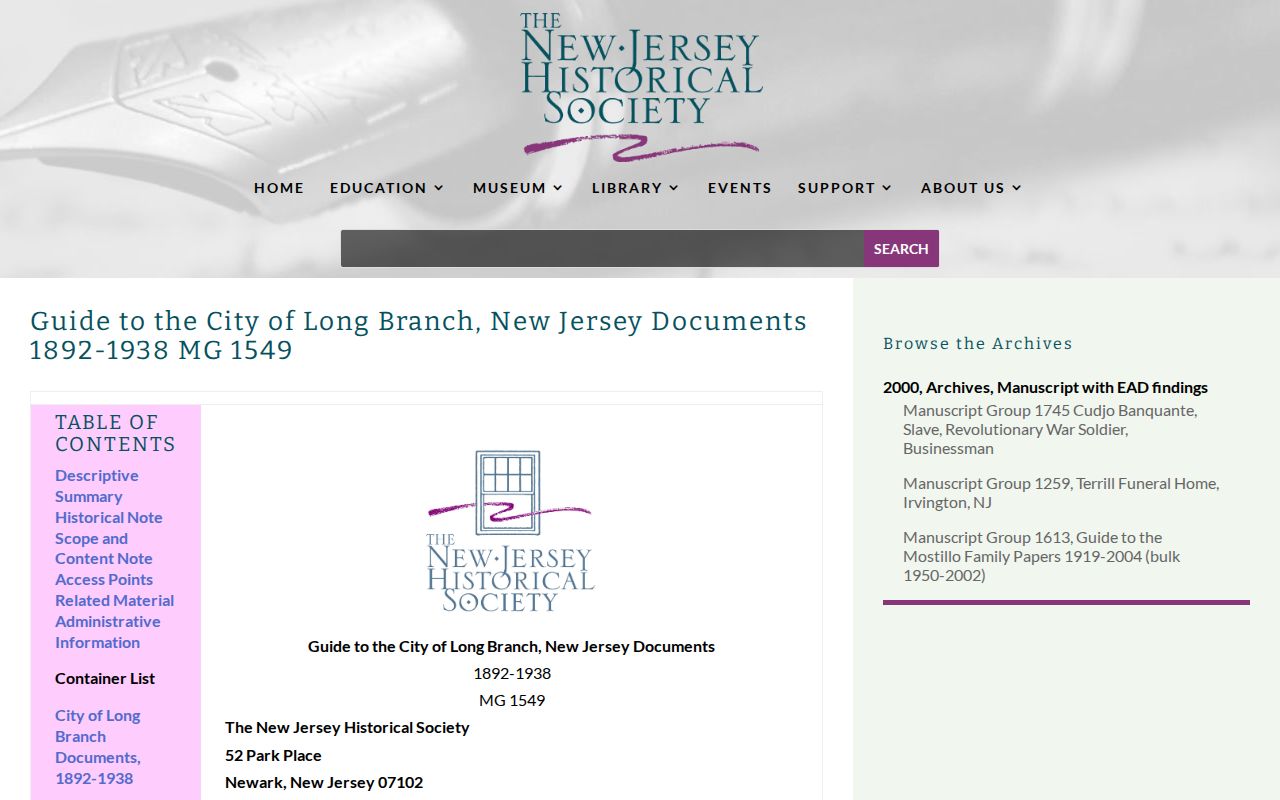
Those municipal records can clarify street names, civic improvements, and a documented public role, but they should not replace the page-level evidence required for a directory entry.