
Find Long Branch Residents
Begin with what you already know. An address points toward the property and tax trail. A name paired with a date might fit a court file, a voter roll, a probate record, or a newspaper item. For old household questions, the Long Branch Library Local History Room is the natural stop. Its holdings include city directories, maps, yearbooks, and newspapers. Every result describes a role at one moment in time. A grantee, an owner, a voter, a court party, and a directory entry are not the same person by default.
Names repeat in Long Branch, so lean on more than one record type. A directory address matched with a dated newspaper story carries more weight than either piece alone. A property card and a deed may draw on the same parcel data. Bring in a different source where identity matters. When a record is missing, note the source, year, and spelling you tried. Then turn to the custodian or an archive.
- Normalize a known street and unit with the USPS lookup before using county tools.
- Check the Long Branch assessor and OPRS tax records for the parcel, owner role, and selected year.
- Use the OPRS land-record index for a dated transaction trail, then keep instrument type and party role.
- For an earlier household, ask the library for the relevant directory, newspaper, map, or yearbook source.
- Send a narrow written request to the correct custodian when an official record has no public search.
Long Branch Records Offices
Records in Long Branch are split by creator. The municipal staff directory identifies city departments. Land records and tax lists live with the Monmouth County Clerk OPRS. The city assessor keeps property descriptions and transfer updates. The Board of Elections runs county election functions. The Commissioner of Registration takes registration questions. The full address-led sequence sits in the Long Branch street directory.
Monmouth County Clerk OPRS
Hall of Records, 33 Mechanic Street
Freehold, NJ 07728
Monmouth Board of Elections
300 Halls Mill Road
Freehold, NJ
732-431-7802 ext. 7150
Long Branch OPRS Record Trails
Monmouth County's Office of Records and Property Services is called OPRS. It is the county gateway for recorded land documents and several related collections. Its land-record tools support instrument, document-type, block-and-lot, and party-name searches. A party-name search needs a last or company name. It also accepts an optional first name, a document type, and a date range capped at 90 days. The percent sign serves as a wildcard. Keep your search terms and range on hand. A no-hit in one window does not close a longer trail.
- Parcel
- A defined piece of land used in tax and map records.
- Index
- A finding tool that points to a recorded document or collection entry.
- Grantor and grantee
- The parties transferring an interest in a recorded land document.
- Criss-cross directory
- An address arrangement that can be used alongside name entries in a directory volume.
| OPRS search field | Search mode | Documented use or format |
|---|---|---|
| Book number and page number | Instrument | Optional instrument number narrows a known recorded item |
| Municipality, document type, dates | Document type | Includes quick 3, 7, 15, 30, and 90-day ranges |
| Municipality, block, lot | Block and lot | Optional date limits connect a parcel identifier to documents |
| Last or company name | Party name | First name and document type are optional; a range cannot exceed 90 days |
The OPRS home page is the source for this Long Branch residents directory screenshot.
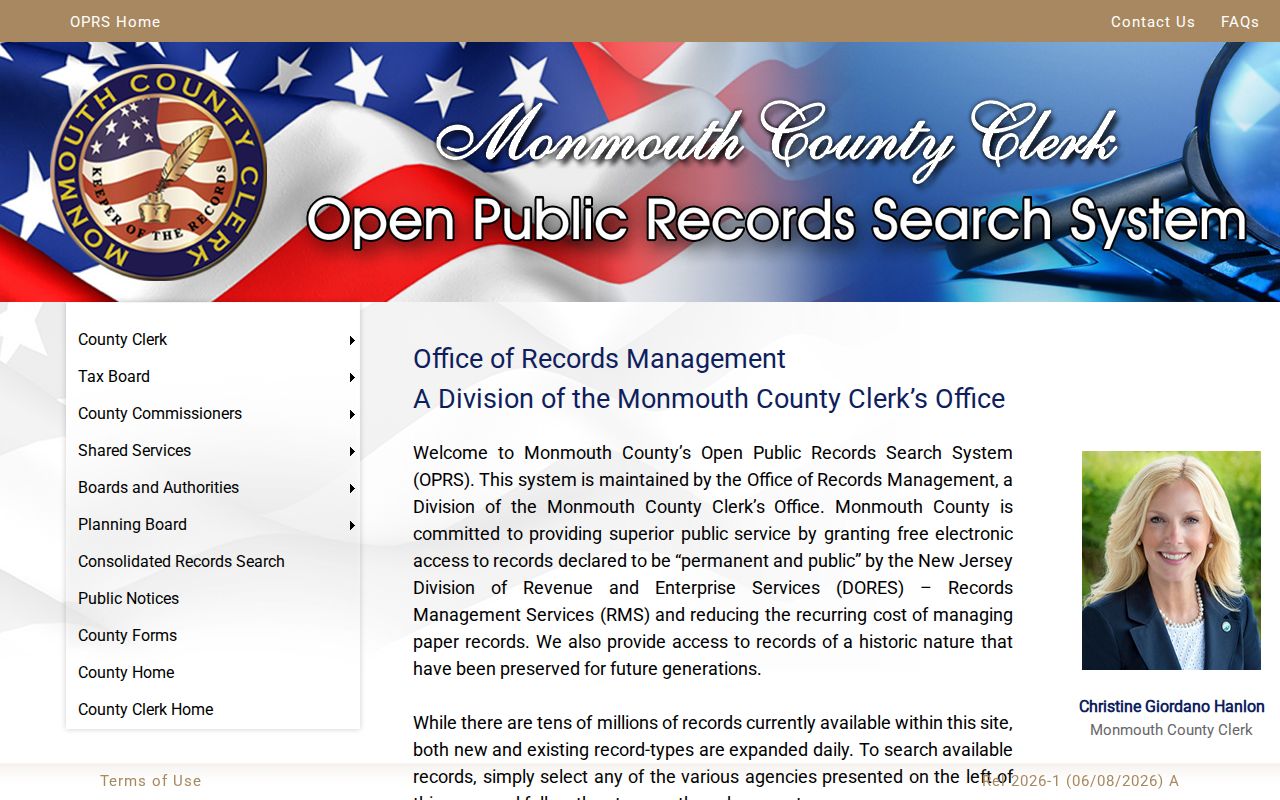
OPRS makes the county path visible. Still, the record date and document type decide what a result can actually establish. Online images are informational reproductions, not sealed copies. Deeds start in the online system in 1970. Mortgages follow in 1976. IRS liens and releases begin in 2010, and other published records in 1996. Anything older shifts to the County Clerk. The Archives, State Archives microfilm, or another documented repository may hold it instead.
Long Branch Parcel Records
The Long Branch Tax Assessor tracks ownership, mailing address, property location, year built, lot size, and structure characteristics. The office also reviews transfers plus changes tied to demolition, appeals, subdivisions, or improvements. Those fields describe a parcel record. On their own they do not identify every person who may use an address, especially when the mailing address differs from the property location. The Long Branch assessor page shows the property-record scope used here.
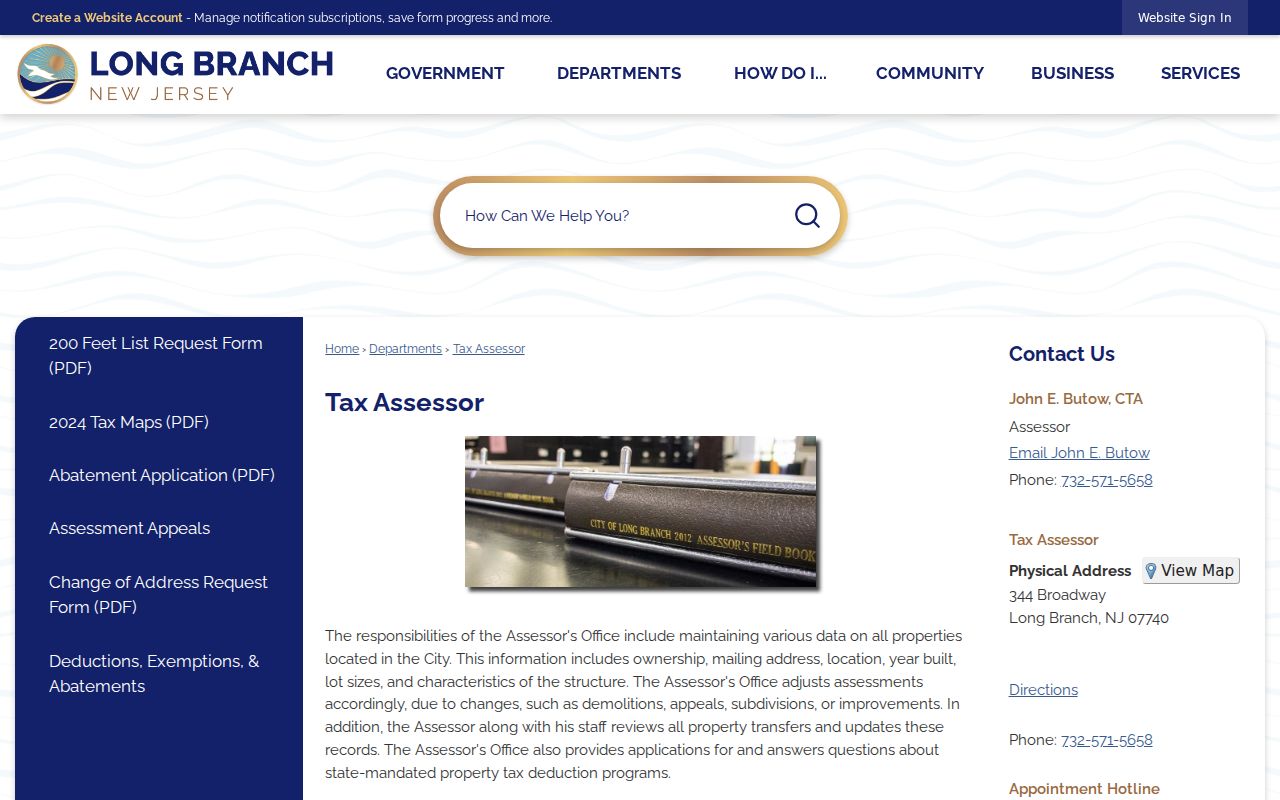
The assessor is the city source for parcel facts. OPRS supplies the county tax archive and the recorded-document trail. The OPRS Tax List Image Archive lets you search an address by street name, township, and year. Owner search adds a name and a tax-exempt option. Block and lot search uses a qualifier and property-type choices. Pick the year with care. A tax list records annual assessment context, and a later change may not yet appear. The OPRS land-record search provides the recorded-document view.
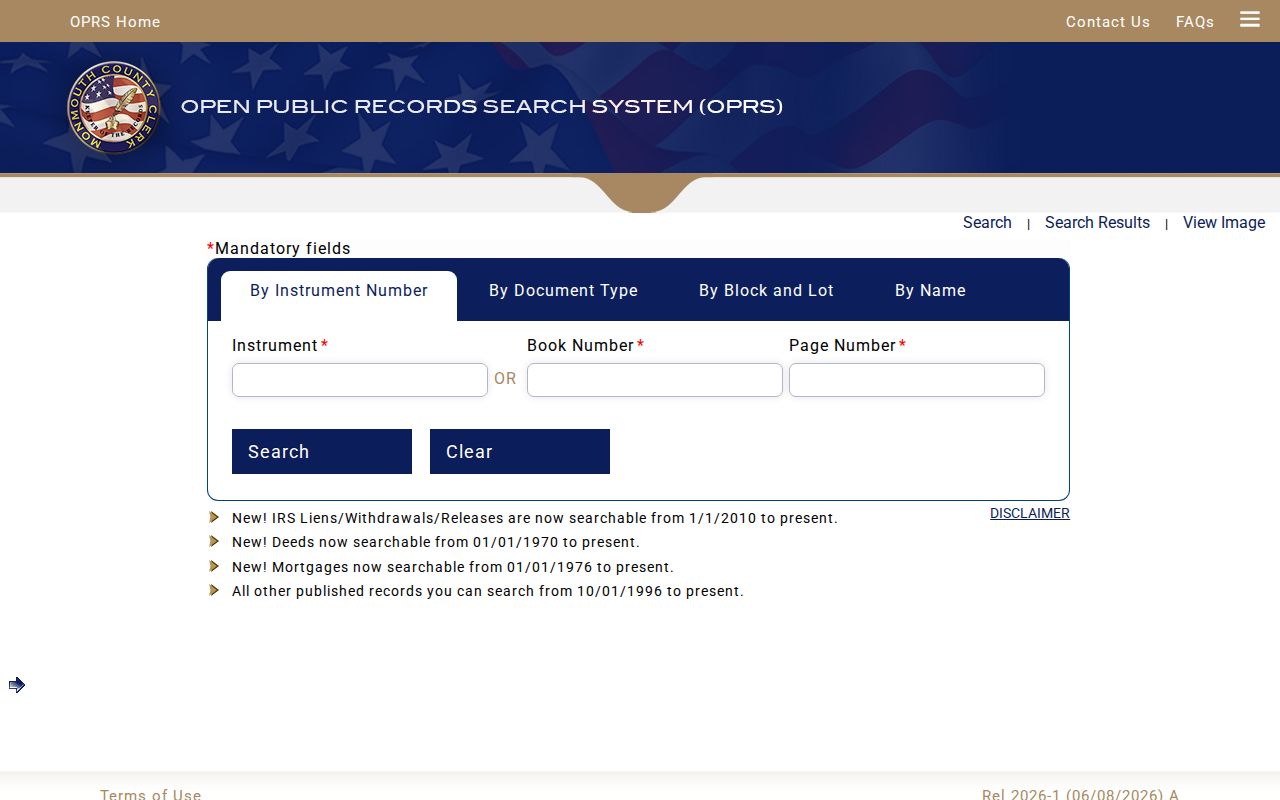
Use a recorded result to name the transaction role and date. Then compare it with the assessor and tax record rather than assuming a continuous residence.
Long Branch Voter Records
New Jersey's registration check is a narrow official tool, not a universal Long Branch directory. The documented fields are first name, optional middle initial, and last name. Date of birth is required. A search button completes the form. Results can shift with hyphens, spaces, middle initials, and nicknames. When the online lookup falls short, Monmouth's election offices can route the record request. The New Jersey voter registration check displays the official search screen.
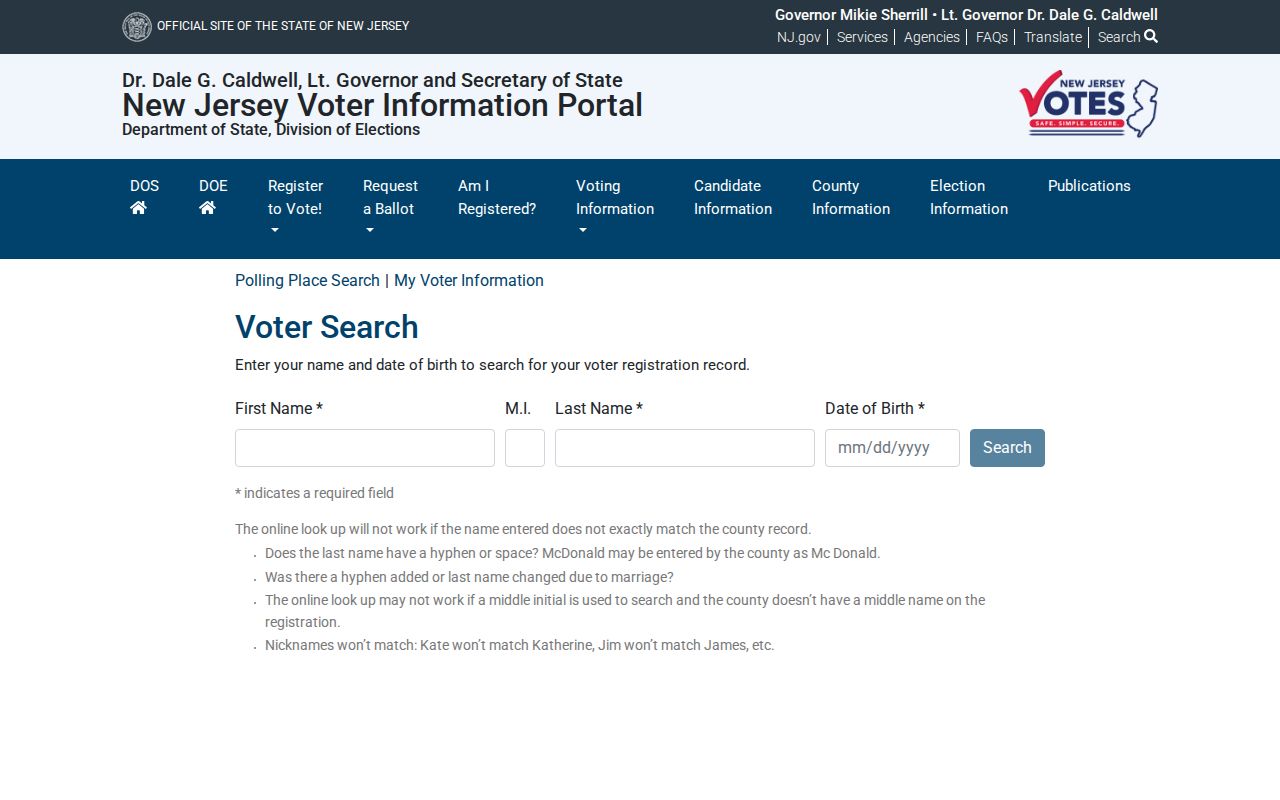
Registration status changes over time. Record the search date and the name format you used. Under N.J.S.A. 19:31-18, certified voter lists show name, address, date of birth, party affiliation, and voting history. Signatures stay out unless a court orders otherwise. An inactive status can follow an undeliverable sample ballot. It does not answer the same question as a current-address search. County roles are divided among the Board, the Clerk, and the Commissioner of Registration. The Monmouth County Board of Elections page supplies the county routing details.
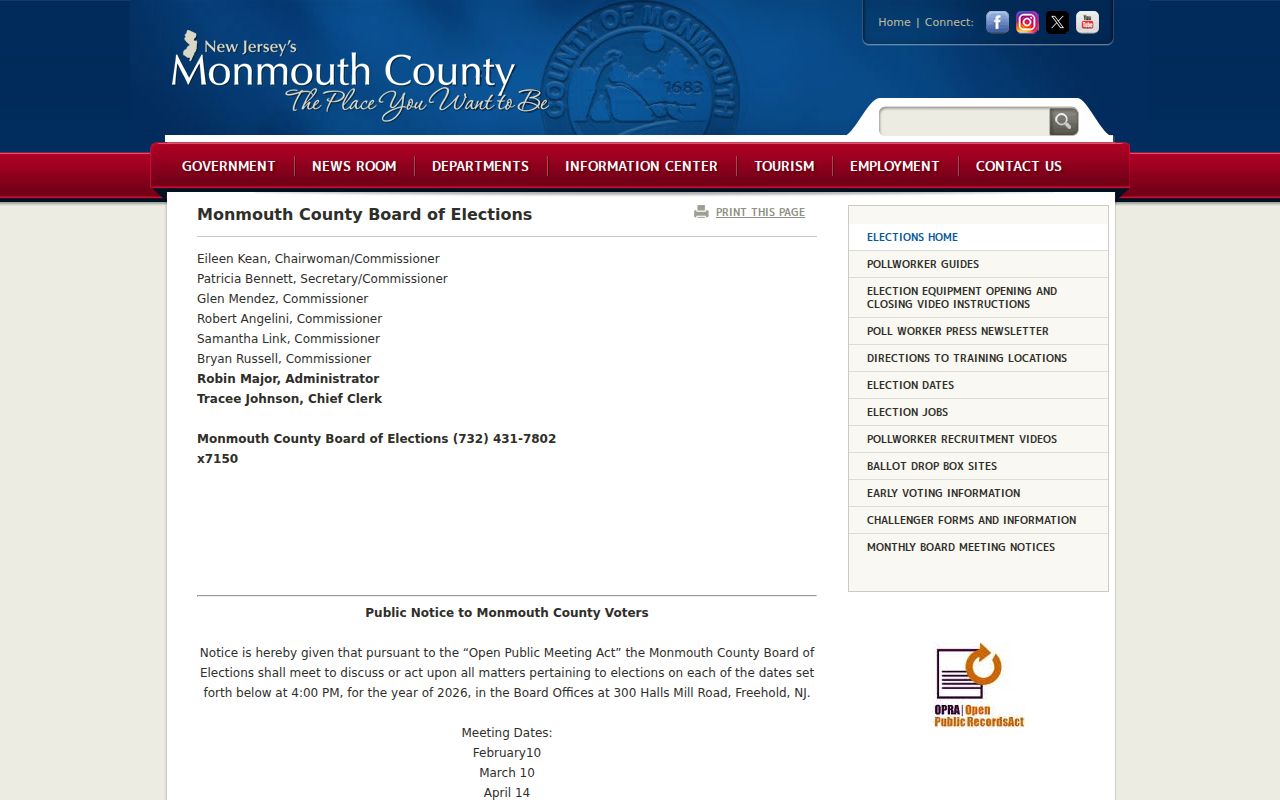
County contacts matter when a registration question needs the proper election custodian rather than another broad search.
Long Branch 07740 Records Geography
Mail geography and assessment geography pull in different directions in Long Branch. Monmouth County assigns ZIP 07740 to Long Branch itself plus the Elberon and West End sections. Neighbors use other codes. West Long Branch takes 07764, while Monmouth Beach, Oceanport, and Loch Arbour use 07750, 07757, and 07711. A historic street directory may list a section name where a modern property rolls index asks for a township. Keep the original wording as the source wrote it. Silently converting every entry to a modern mailing label hides the record's own geography.
A ZIP code directory result normalizes an address for delivery. It proves nothing about occupancy. It does not settle municipal incorporation or an exact neighborhood boundary either, and no official boundary history for 07740 is published. When records disagree, weigh the USPS output against the OPRS township choice, a parcel map, and whoever created the record. Only then decide which address form belongs in your search log.
Note: Long Branch section names work well as search variants, but they need a source date before counting as geographic evidence.
Current Long Branch Resident Rolls
No single official source adds up to a complete current Long Branch residents directory. Each record system answers a different question. Property rolls show owners. Voter rolls show registrants. Court, business, and municipal files each carry their own angle. The table below keeps those limits in view. Remember that a property owner is not automatically an occupant. The same goes for a person holding a public role.
| Long Branch source | Recorded role | Custodian | Access route |
|---|---|---|---|
| Tax and assessor files | Owner, mailing and parcel details | Long Branch / OPRS | Assessor page and tax archive |
| Voter registration check | Registration status | New Jersey / Monmouth | Official lookup and elections contacts |
| Recorded land index | Grantor, grantee, lender, borrower | County Clerk OPRS | Online images or Clerk copy |
| Municipal staff directory | Public department role | City of Long Branch | Official city directory |
| Local history collections | Historical household or organization | Long Branch Library | Library or in-library database |
Tracking one named person means comparing spelling, role, venue, and date instead of piling up unrelated hits. The Long Branch resident lookup walks through that evidence chain in more detail.
| Long Branch research route | Best use | Limit to retain |
|---|---|---|
| Official city, county, and state records | Dated property, court, election, and historical evidence | Each source describes a narrow role |
| Library and archive collections | Family, house, classmate, and local-history research | Catalog data or a listing still needs context |
| Commercial search category | A starting point for a question to verify elsewhere | May be incomplete, costly, or out of date |
Long Branch Court Searches
New Jersey Courts maintains public search paths covering civil, foreclosure, judgment, tax, and criminal matters. Criminal-judgment and municipal-ticket matters appear there too. A Long Branch inquiry can land in several places. The Municipal Court, the Monmouth Vicinage, or even a federal courthouse may hold the file. Search each system on its own. A result in one venue never proves another court holds nothing.
The New Jersey Courts public search is the court channel shown in the image.
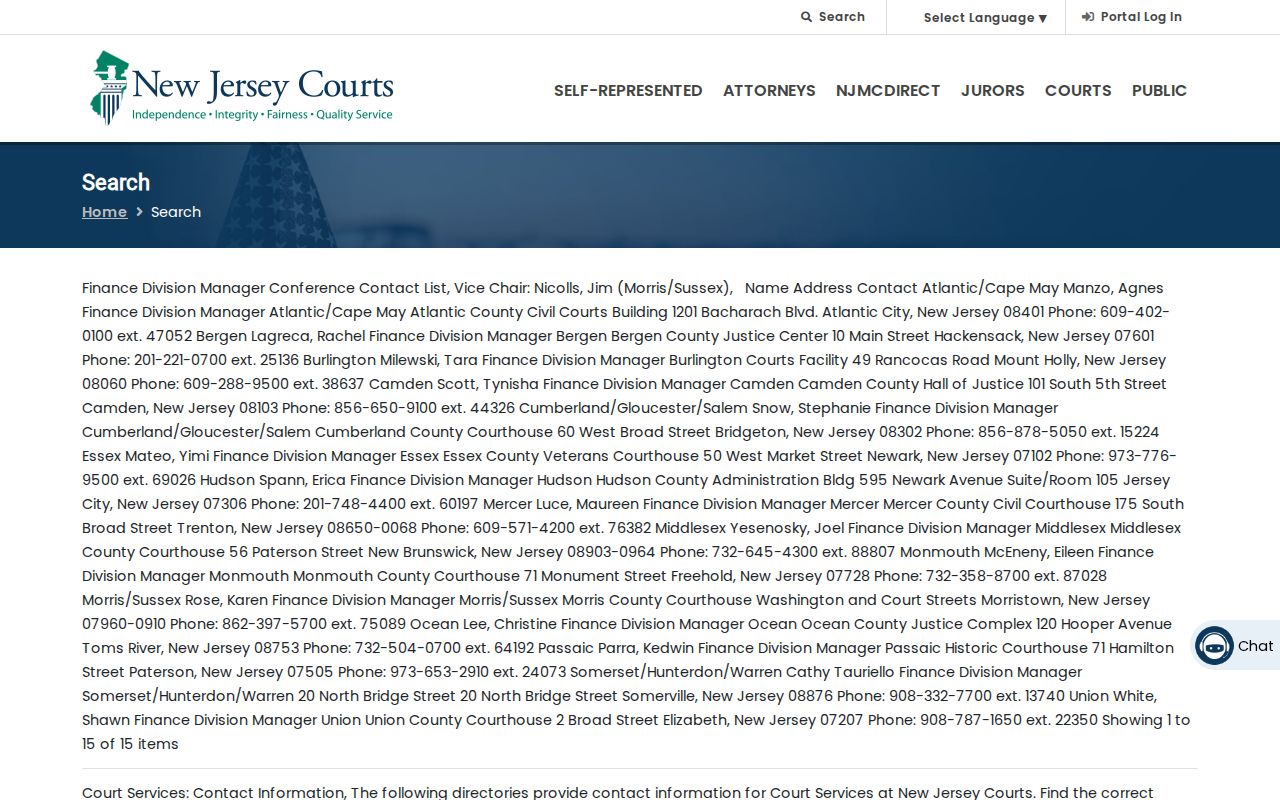
The public case-jacket party search starts with a choice between individual and business, then a last name, a first name, and an optional middle initial. Results come back with name, venue, docket number, case caption, and initiation date. Keep those fields together as a unit. Only then judge whether the party is the person you mean.
Long Branch Municipal Court separates a disposition request from a discovery or police-record request. Its FAQ points to a Judiciary Records Request route. A raised-seal disposition copy runs $10. The same copy without a raised seal runs $5. Police Records handles accident reports separately. Some court records are sealed, expunged, confidential, or restricted, so absence from a search is not proof of nothing.
Long Branch Vital Record Limits
Vital records are not an open resident roll. A Long Branch birth, death, or marriage starts with the local registrar. The registrar sits at the Health Department. Certified copies require the relationship, identification, record details, and payment the city specifies. The fee is $15 for each birth, death, marriage, domestic-partnership, and civil-union certificate. The city may not locate the event. In that case, the state Department of Health is the next route.
The Long Branch Vital Statistics page is the local-record source for the image above.
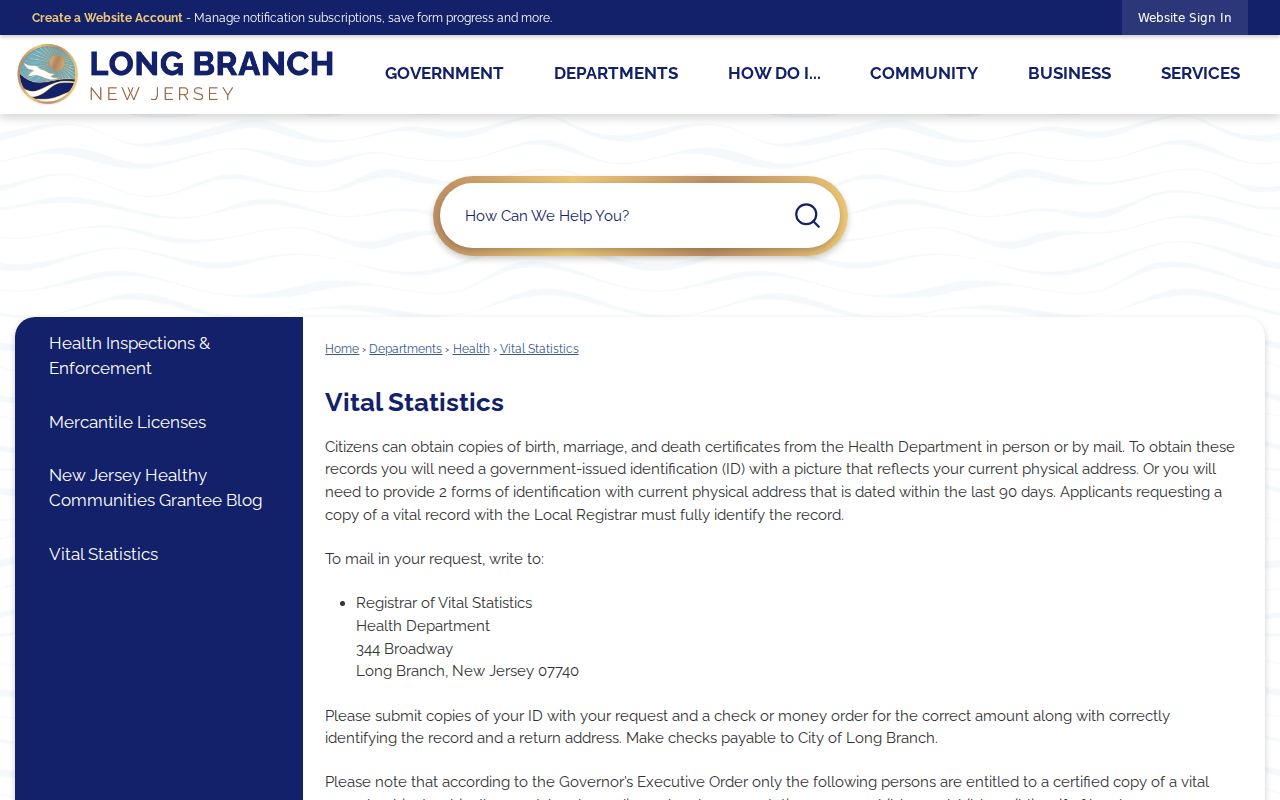
Access rules shield current vital records at both the local and state level. A genealogy request follows a different pathway than a certified-copy request. The thresholds matter here. New Jersey opens birth records after 80 years. Marriage records open after 50. Death records open after 40. The State Archives holds the older collections. The Department of Health holds later state records, and the split turns on dates alone. Restricted events do not become a general lookup shortcut just because a genealogist wants them.
The New Jersey Department of Health Vital Records page shows the statewide channel.
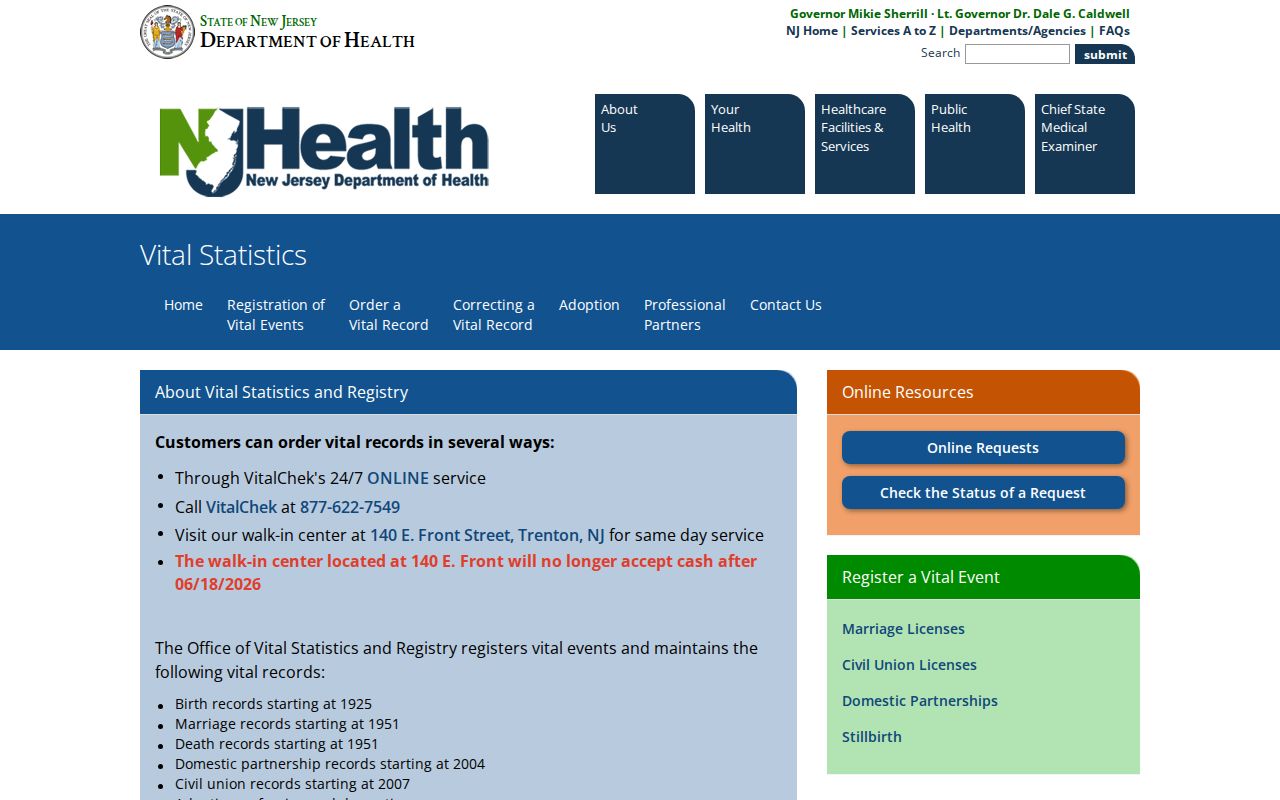
Treat the state page as a fallback after the local registrar. It never replaces the eligibility rules attached to the record you request.
Long Branch Library History
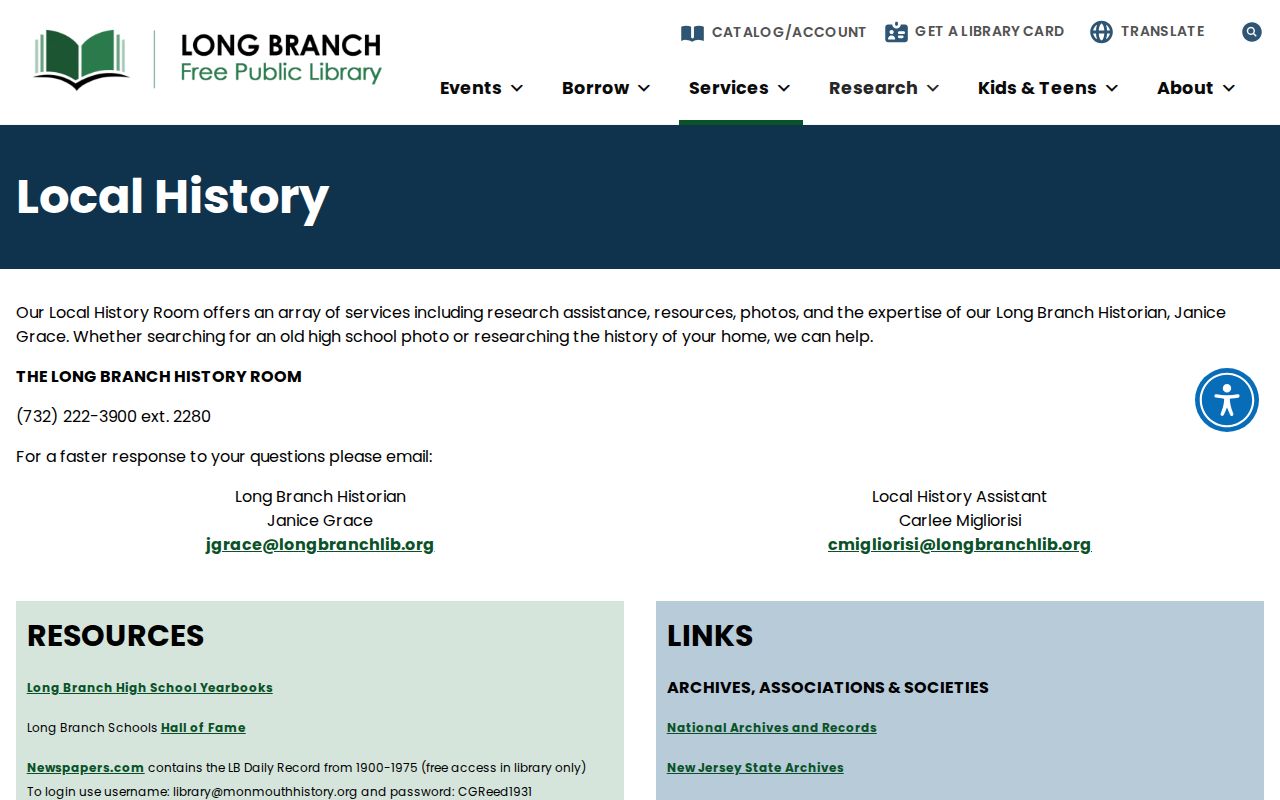
The Long Branch Library Local History Room is the best local route for tracing a former household. A classmate, a family address, or a house history works too. Staff can help with city directories, yearbooks, newspapers, maps, atlases, photographs, and local organizations. Genealogy links are part of the help as well. Holdings include the Long Branch Daily Record from 1900 through 1975 in the library. Selected 1886 issues of the Long Branch News survive in incomplete runs. Local high-school yearbooks round out the collection.
The Long Branch Library Local History page appears below.
Come prepared. Bring a present address and an approximate era. Add a block and lot if you know it, plus any older street or owner name. The historian can then separate a named directory occupant from a deed holder, a hotel entry, or a business location. These often look identical on paper.
This local route matters because maps and directories have gaps. A catalog confirms a holding exists. A directory year places a historical listing. Neither proves present occupancy. So pair the dated entry with a second source such as a newspaper, probate record, tax list, or deed.
Long Branch Role Checks
A name in a record proves a role, not a home. The tax owner may list a mailing address somewhere else entirely. A deed might name a trustee, an estate, or a buyer rather than an occupant. Court papers tie a person to a case. Business filings only identify an organizational role. Whenever you save a hit to your Long Branch residents directory notes, record the role and the date together. That could mean grantee on a dated deed. It might be an entry in a specific street directory. Or it may be a registration status as returned on a certain day. That discipline keeps a plausible match from hardening into an unsupported conclusion.
For a claimed business or public role, go to the specific official source. New Jersey Revenue's business records can confirm legal status. They also cover registered agent, filing dates, and other entity details. The notary search works by last name, city, ZIP, or commission ID. A result there can back up a role. It still will not establish a private address.
Lawful use. Long Branch public records support family history, estate research, civic questions, and checking a specific claim. Do not use a record trail to watch, harass, or harm any person.
Long Branch Request Routes
When the online trail runs cold, ask a simpler question. Which office created the record? Monmouth County's records guidance points vital statistics to the municipality or the New Jersey Department of Health. Court records go to the right court. School records belong to the local district. A written request under the New Jersey Open Public Records Act, N.J.S.A. 47:1A-1 et seq., should go to the correct custodian. Ask for a specific record. A request that hunts for everything about a name or address will not get far. The Long Branch municipal directory gives an official map of department contacts for routing.
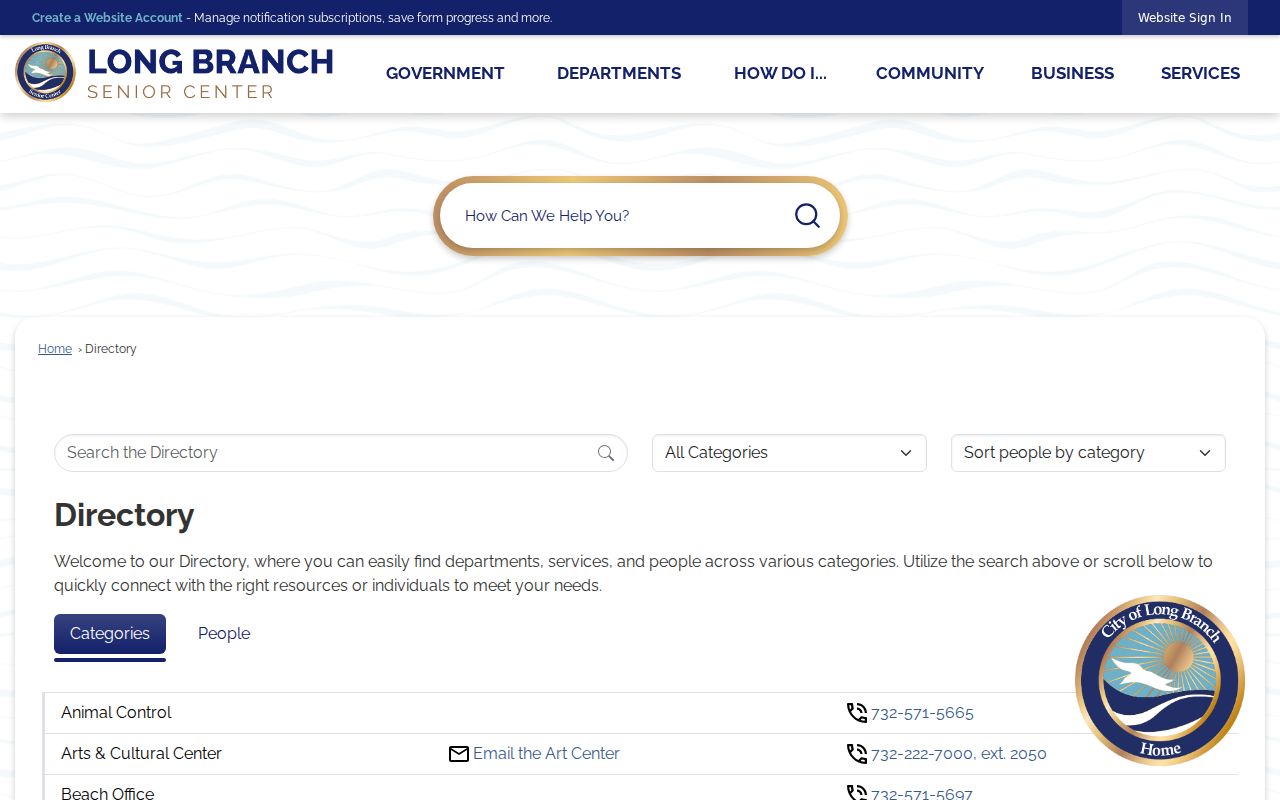
The city directory helps you aim a request at the right office. That office is the one that actually made the record. It could be the City Clerk, Police Records, Court, Assessor, Planning and Zoning, Health, Library, or another department. One caution applies to the online portal. OPRS carries a 2026 redesign label and recommends desktop use because mobile access is limited. New Jersey OPRA guidance also reflects amendments effective September 3, 2024. Before filing, check the live form, the release note, and any custodian directions. Then keep a copy of what you submitted.
Historical Long Branch Directories
Long Branch directory holdings reach back a long way. The run opens with an 1883 guide. It moves through the 1912 Boyd's volume and the 1927 official directory. It also includes selected Polk's runs through 1970. The New Jersey State Library inventory supplies part of the catalog evidence. The New Jersey Historical Society microfilm guide supplies the rest. Nearby places can appear inside any given volume. Preserve the printed location rather than quietly treating every entry as the modern city.
The Historical Society files its parallel Long Branch runs under the Asbury Park City Directories Series. Monmouth County runs offer a second context when a name is missing from the city volume. Broader county sets offer the same backup. For a house or a block, pair the dated street directory with the library's maps. Its newspapers, photographs, and house-history help fill out the picture.
A directory can place a person or organization at an address during one publication period. It cannot prove a present address or an exact move date. For the full collection history, see the Long Branch city directory collections page. It also covers repositories and a reading method.