
Long Branch Previous Residents Sources
Past residents leave different kinds of records. A parcel trail starts with an address, block, lot, or legal description, then moves back through deeds. A household trail needs a directory or census record for the same period. Maps, probate, and municipal files help when a street name, number, or lot has changed. The table separates the available layers so that a record is not asked to prove more than it can show.
Long Branch deed books, Long Branch tax lists, Long Branch directory volumes, and Long Branch library materials preserve different dates and roles. A Long Branch address trail becomes useful only when the parcel form, source date, and historical person record align.
| Source | Years It Covers | Where Held | What It Shows |
|---|---|---|---|
| OPRS recorded deeds | 1970 forward | Monmouth County Clerk OPRS; County Clerk title-search route | Recorded ownership transaction and parcel detail |
| OPRS mortgages | 1976 forward | Monmouth County Clerk OPRS | Financing parties and recorded instrument context |
| Other OPRS published records | 1996 forward | Monmouth County Clerk OPRS | Instrument-specific recorded material |
| Long Branch directory runs | Verified runs from 1883 through 1970, with gaps | Library, State Library, and NJ Historical Society microfilm routes | Dated household, address, and role clues where listed |
| Estate and archive records | Estate series 1739-1924; later indexes as noted below | Monmouth Surrogate and County Archives | Estate administration and historical family context |
Start with the newest reliable parcel identifier if the question concerns ownership. Start with a known year, surname, or historic address if the question is who lived here before. The two paths should meet only after the address form, date, and person role agree.
Long Branch Previous Residents in OPRS
The Monmouth County Clerk's OPRS system is the electronic starting point for a modern Long Branch property trail. Its documented record boundaries are deeds from 1970, mortgages from 1976, and other published records from 1996. A deed can identify grantor and grantee, consideration, street address, block and lot, and a metes-and-bounds description. It establishes a recorded relationship to a parcel on a date. It does not, by itself, establish that either party lived there.
The OPRS recorded-land search offers instrument, document-type, block-and-lot, and name paths. Digital images are informational reproductions without an official seal; obtain a certified copy from the County Clerk when certification matters.
INSIDER TIP. OPRS name searches allow the % wildcard, but each date range is limited to 90 days. Use successive time windows and preserve the exact party spelling used in each hit.
Long Branch House History Records
The Long Branch Library expressly offers help researching the history of a house. Its Local History Room connects directories, newspapers, maps, atlases, photographs, yearbooks, and local-history databases. Bring the present street address, known block and lot, approximate construction period, any prior street name, and an old owner name if one is known. Ask that a directory resident, deed holder, hotel guest, or business occupant be kept as a distinct role.
A library-assisted search can also carry the property trail into municipal context. The NJ Historical Society finding aid covers Long Branch municipal documents from 1892-1938, including tax bills, ordinances, reports, receipts, payroll material, affidavits, and bonds or scrip. Ordinances from 1913-1934 can be helpful when a street form or municipal improvement needs historical context.
Monmouth County Archives is the county route for older manuscript and archival holdings that are not one unified online index.
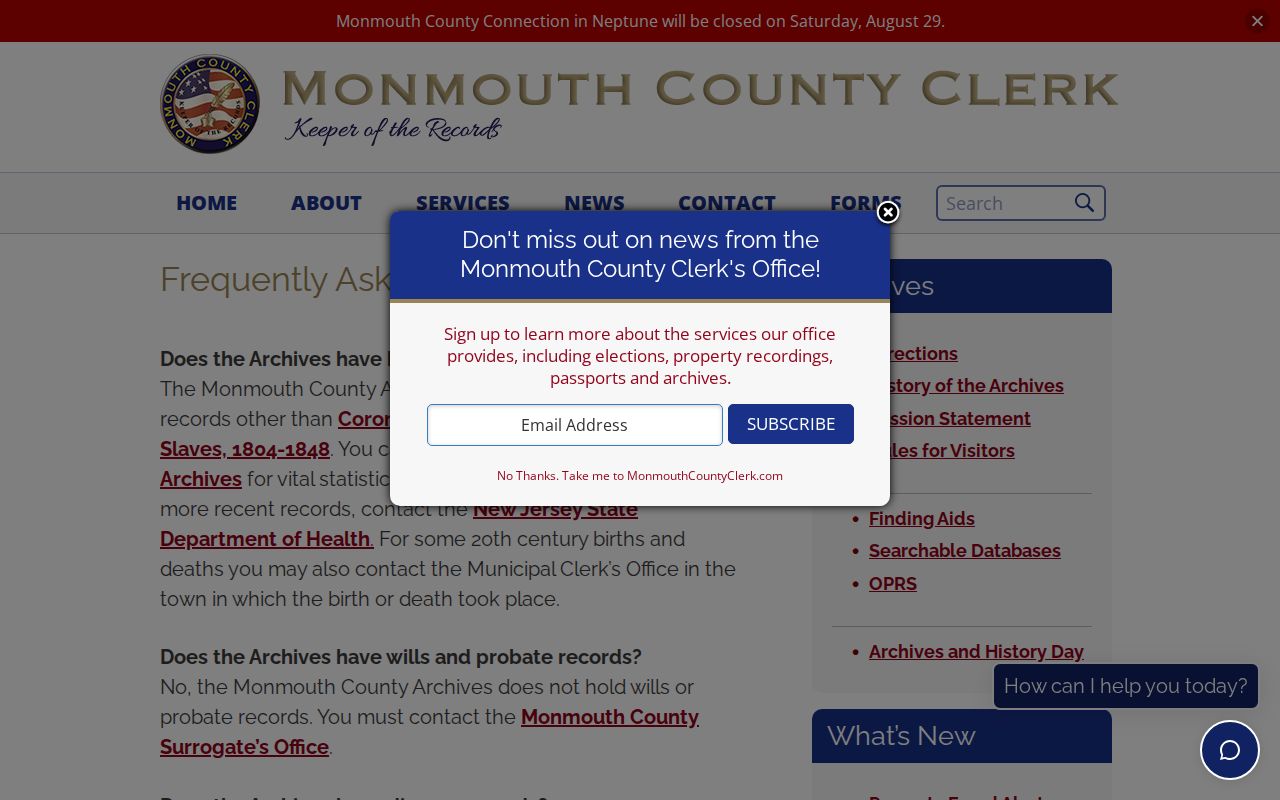
The archives route is a fallback when an online search ends at a date boundary, not evidence that the historical record is complete or instantly searchable.
Tracing Long Branch Past Owners
A defensible deed chain begins with the parcel, not with a familiar surname. First normalize the address and identify the municipality, block, lot, and qualifier where applicable. The OPRS tax-list address search uses street name, township, and year rather than ZIP. The city assessor and county GIS add assessment and map context, while the deed supplies the legal document trail. Keep the tax year and recording date separate.
- Record the current street form, selected tax year, block, lot, qualifier, and legal description from the assessor, tax list, or recorded document.
- Find the newest purchase deed for that parcel in OPRS, then save the instrument date, grantor, grantee, and source status.
- Use the seller from that deed as a grantee search target to locate the seller's earlier acquisition, while confirming the same parcel description.
- Repeat the documented transfer sequence backward, flagging trustee, estate, corporate, lender, or fiduciary roles instead of treating them as household members.
- At the 1970 deed boundary, move to County Clerk books, archival material, State Archives microfilm, and other historical repositories rather than assuming the chain ends.
- Grantor and grantee
- The grantor conveys an interest in a document; the grantee receives it. Their labels matter more than a name alone.
- Chain of title
- A dated sequence of recorded transfers for the same parcel, checked against property identifiers at each link.
- Legal description
- The parcel wording, block and lot, or metes-and-bounds description in a record. It can tie together changing street forms better than an address alone.
- Criss-cross directory
- An address-arranged directory section that may help identify an historical household, if the specific volume includes it.
Long Branch Previous Residents Beyond OPRS
Older deed research requires a change of repository. County indexes and deed books historically preceded electronic access. The New Jersey State Archives holds microfilm copies of county deeds through 1900, while original records remain with counties. FamilySearch also provides a New Jersey wills-and-deeds collection with names, dates, transactions, and locations where available. Its availability and images can vary, so an index result should identify the collection and be checked against the holding institution.
FamilySearch's New Jersey wills and deeds collection can be a source lead for an earlier transaction, not a substitute for confirming the county record or archive reel.
For each older link in the chain, keep the instrument date, party roles, property wording, repository, and confidence in one log. If an old deed and a newer tax card use different street forms, compare the legal description, block and lot, subdivision information, and map context before joining them. A lot split or merger can explain the mismatch. It should be documented, not silently corrected.
Long Branch Previous Residents on Maps
Maps explain why a simple street-name search can fail. The Library of Congress holds a New Jersey Coast Sanborn volume for 1890 with Long Branch and North Long Branch sheets, and a 1905 volume with Long Branch and West Long Branch coverage. These maps can show footprints, materials, uses, street widths, hydrants, and labels where present. The research did not establish a complete year-by-year Sanborn run, so an uncaptured year should remain a stated gap.
Compare a directory address with the Sanborn sheet, the 1860 Beers map, the 1886 Smith atlas, a deed description, and current parcel identifiers. A map label for a hotel, store, church, or named building provides place context. It does not identify every person associated with that address.
Municipal documents can supply another bridge. The Historical Society finding aid includes street, curb, and street-naming ordinances from 1913-1934. A changed street number is not necessarily a new parcel, and an old neighborhood label is not necessarily a legal boundary. Treat the map, ordinance, directory, and deed as separate evidence that must agree before a past household is attached to a present address.
Long Branch Previous Residents in Estate Records
Estate files can connect a person to property, family, creditors, purchasers, or an inventory after a death. The Monmouth Surrogate's online estate index covers 1991 forward and is updated about every 24 hours. Earlier work uses the Russell Index for 1798-1991. The county's archival estate-record series spans 1739-1924 and can include administrators, inventories, appraisals, taxes, purchasers, and related business records. An estate reference is a dated probate connection, not automatic proof of a residence.
The Monmouth County Surrogate genealogy page documents the online and historical index routes.
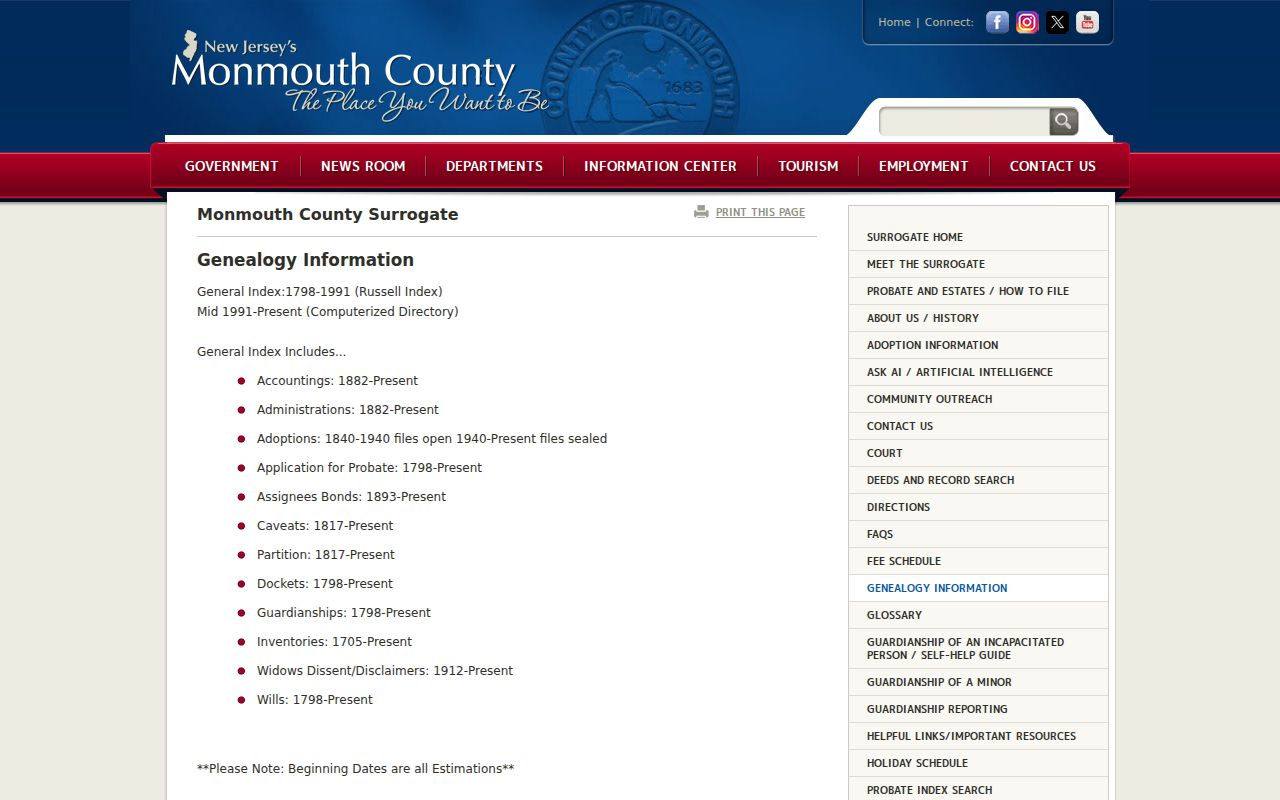
The genealogy route identifies the proper index period before a researcher asks for a file or compares an estate name with a deed record.
The Surrogate estate index is the current online entry point for the later period.
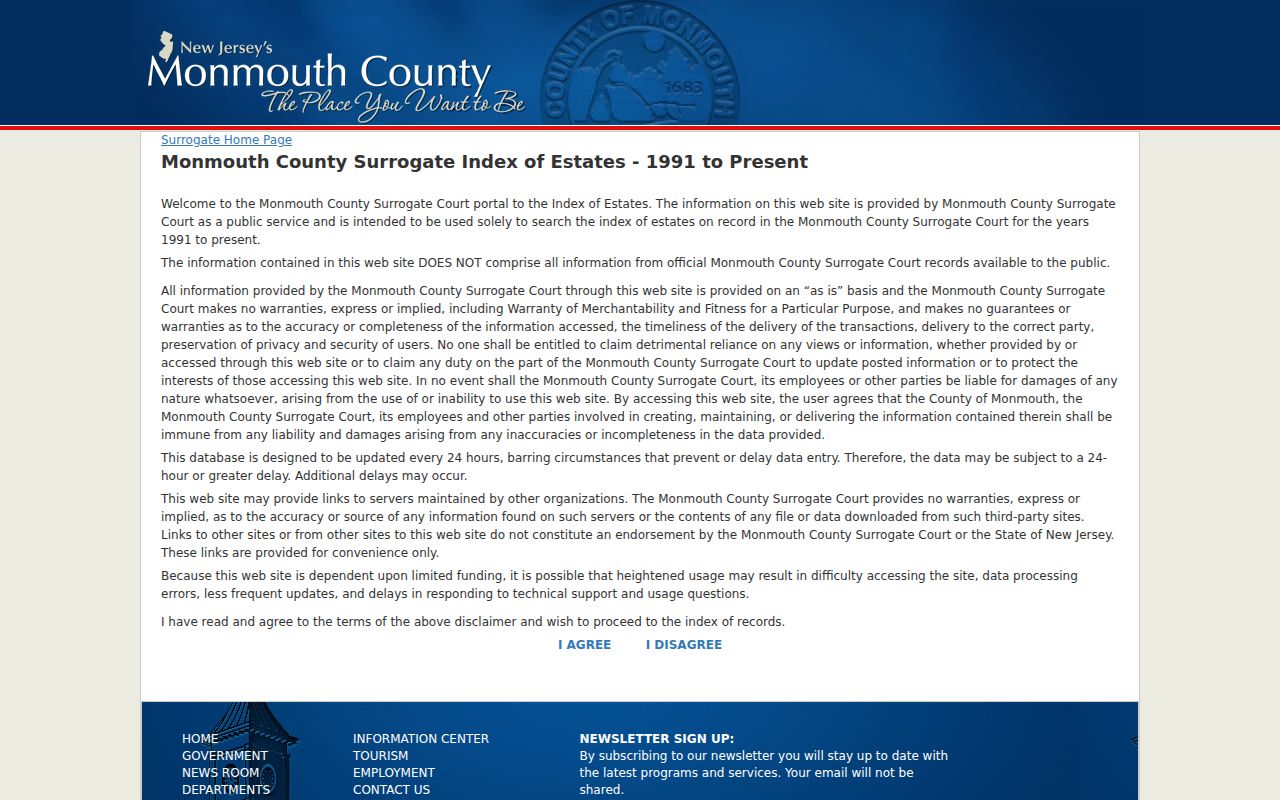
The public search is provided as is and is not described as a complete set of public records, so a no-hit deserves a check of the older index or staff route.
Monmouth County's estate-records description identifies the earlier archival series and its contents.
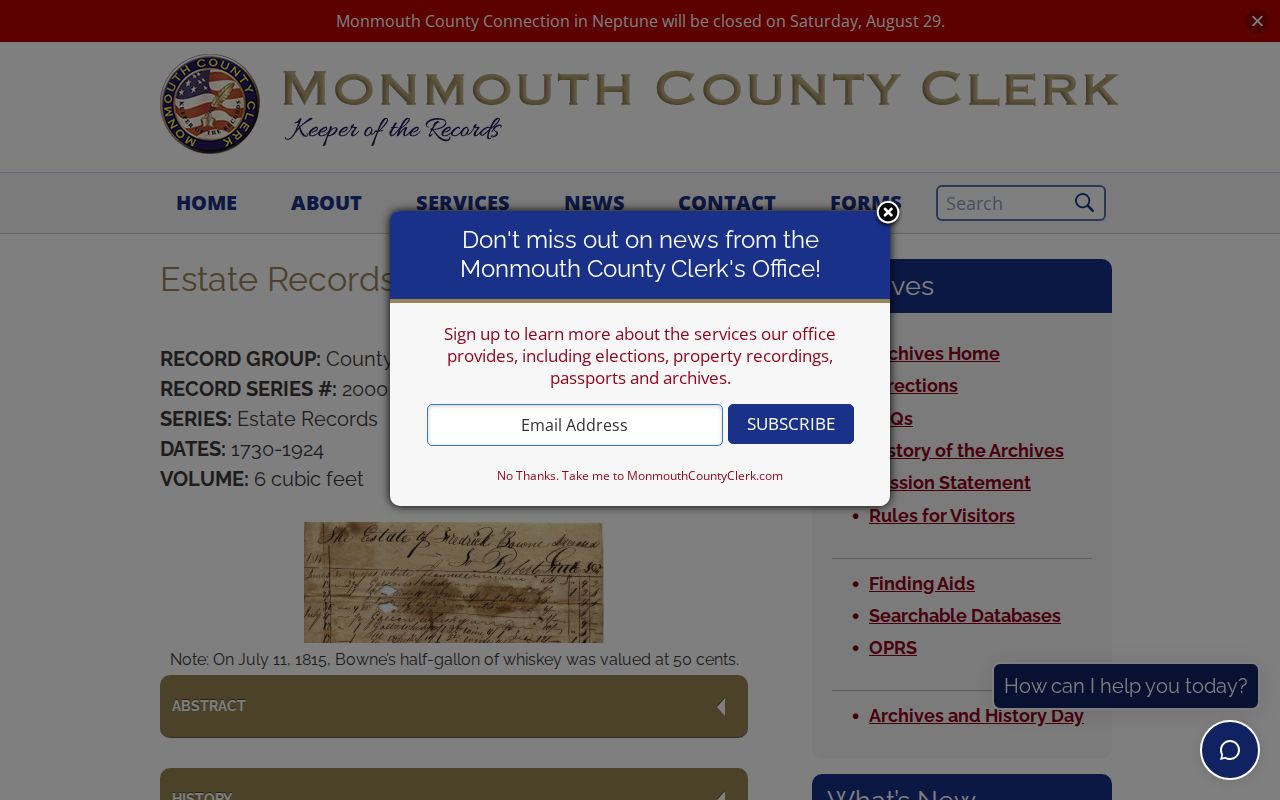
Estate documents are especially useful as a time-stamped endpoint for a historical trail when they are paired with the deed and directory evidence for the same person.
Past Households in Long Branch Records
Ownership is only one layer of a house history. To identify past residents, pair the available Long Branch directory years with census and other household evidence. The directory collections themselves, including their publisher changes and gaps, are described on the Long Branch city directory collections page. Use each entry as a dated clue, then seek a second record that describes the same person and address.
- Choose the directory year closest to the address event and record the printed street form, name spelling, page, and repository.
- Check an earlier and a later available directory, preserving gaps rather than inventing a move date.
- Pair the resulting period with the appropriate census schedule and compare household names, ages, relationships, and address context where available.
- Use the OPRS 1875 census search with town, category, and name filters for county historical context, trying spelling variants.
- Close an uncertain trail with a dated newspaper, obituary, probate, deed, or map reference, and mark conflicts in the research log.
The OPRS 1875 census search supplies an official county archive path with town, category, person-name, and starts-with or contains options.
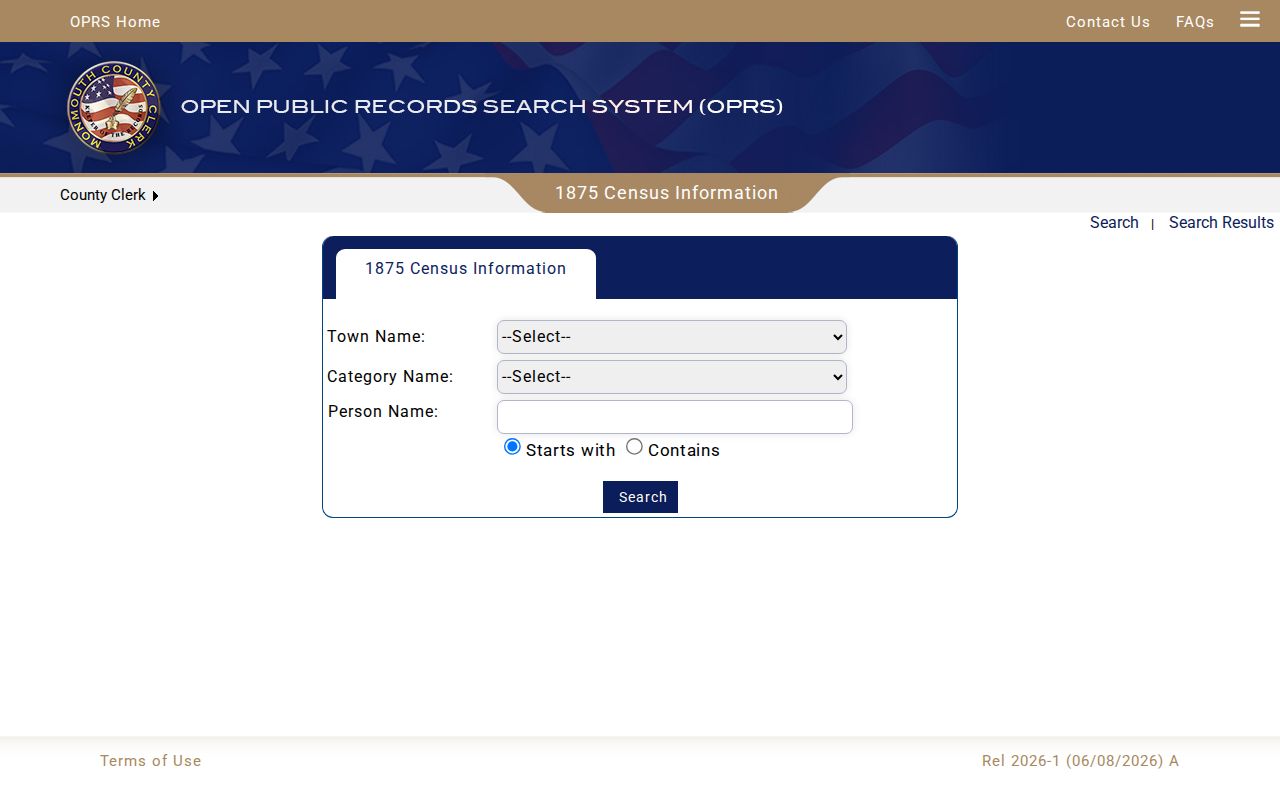
This historical census tool can support a name-and-place comparison, but it does not replace a record of the exact street address when the result lacks one.
Lawful use. Long Branch previous-resident research fits family history, heir work, house history, and local history. Keep dates and roles clear, minimize personal details, respect protected addresses, and never use public records to track or harass a living person.